
ENTERTAINMENT
JIMMY
ONSCREEN MOVIE REVIEW

Behind the Silver Screen: How Faith, War, and It’s a Wonderful Life Shaped the Real Jimmy Stewart
So, Jimmy (2026) starts in February 1941 with Jimmy Stewart (KJ Apa) accepting an Oscar. At this point in his career, Hollywood is painting him as a bit of a playboy, with Ginger Rogers (Jemma Donovan) appearing to be his latest love interest. However, as the story unfolds, you begin to realize that there is much more to Jimmy than the image Hollywood has created. He comes across as a genuine hometown boy who simply loves acting.
Then, in 1941, the draft notice arrives, and Jimmy receives his official call to serve in World War II (1939–1945). Word quickly spreads, and it becomes clear that some people, particularly MGM studio head Louis B. Mayer (Jason Alexander), don’t want him going off to war. Jimmy has become such a beloved and recognizable star that they fear something happening to him could negatively affect the morale of the American people.

If you don’t know much about Jimmy Stewart’s story, this movie is particularly special because it allows you to see behind the lights, the cameras, and the action of 1940s Hollywood. You get to see the man behind the Hollywood star. You see someone who struggled with witnessing things in war that you simply cannot unsee. Friends dying. Men being blown up. Moments that would forever shape Jimmy Stewart’s life.
But you also get to watch him develop into a man of even stronger character. You see him struggle with what we would now recognize as PTSD. You see him wrestle with his beliefs, even as he is fighting for the very things he believes in.
There is also a sense of imposter syndrome that comes through in his character. He is the man responsible for leading other men, saying the things they need to hear, encouraging them, and giving them hope. Yet, he is also watching those same men die in battle. He carries the weight of those decisions, but he never backs down from a fight. He wants to be with his men, in the trenches, rather than sitting safely on the sidelines.
I also appreciated how the movie included the important women in his life. It opens with Ginger Rogers (Jemma Donovan), someone Jimmy genuinely seems to care about. But by the time he is drafted, she is engaged to someone else.
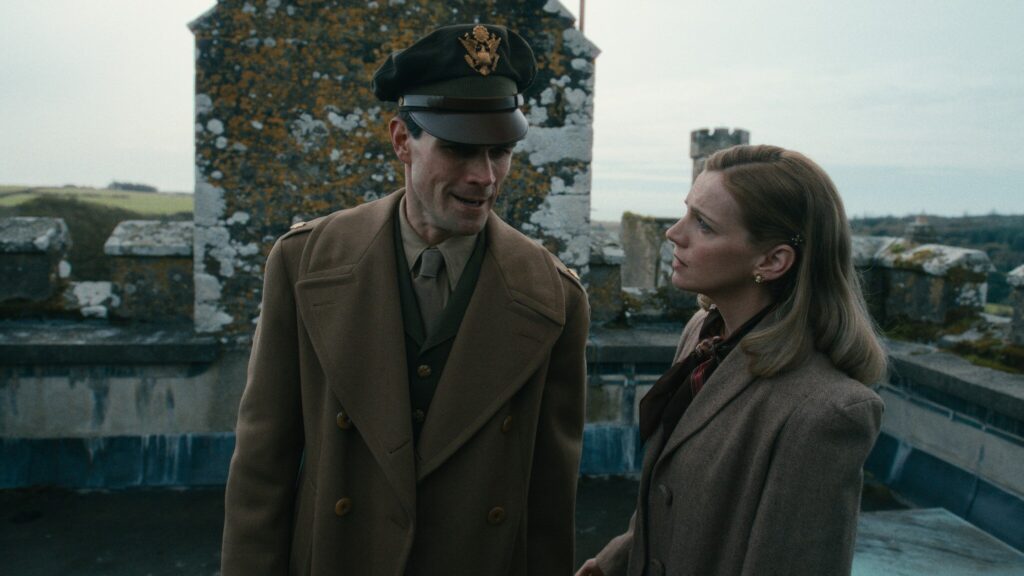 Then, when he arrives in England around 1943, he meets a woman named Lady Julia (Kara Killmer). She sings for the soldiers, and the two seem to develop a brief but meaningful connection. She is a widow who works with an orphanage and the Salvation Army and seems to dedicate much of her life to helping others. In many ways, she becomes something of a spiritual compass for Jimmy. He attends church, spends time with her, and seems to find comfort in their friendship. Eventually, however, their lives take different directions.
Then we see Jimmy return home after the war in 1945. He isn’t immediately back in Hollywood. Instead, he’s just an ordinary Joe again, cleaning his father’s shop and enjoying milkshakes. He’s trying to figure out how to live with everything he has experienced.
And this is where It’s a Wonderful Life (1946) comes into the picture. The movie reveals how the script and the character of George Bailey helped Jimmy begin to process and come to terms with some of the horrors he had witnessed during the war.
“One thing I really loved about this movie was that it didn’t just show us the star, Jimmy Stewart. It showed us the man.”
Remember, this was a war against Hitler and Nazi Germany. These were very serious circumstances, and Jimmy had seen things that only a man who believes in our country could fight for. Be willing to die for.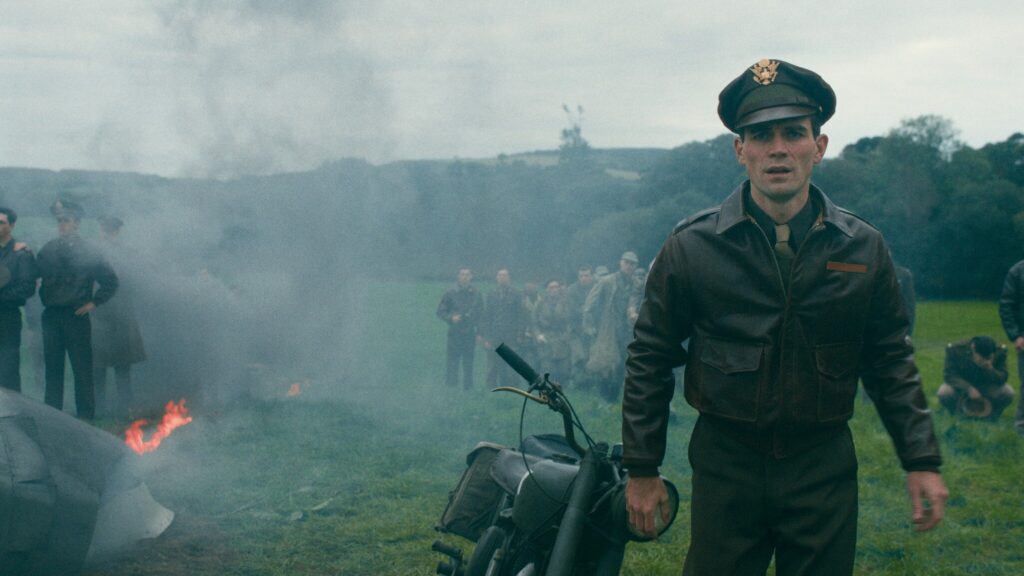
As the story progresses, his close friend and director, Frank Capra (Max Casella), encourages him to take on the script for It’s a Wonderful Life. That decision ultimately changes the direction of his life. We get to see him begin to heal, eventually meet his wife, Gloria (Jen Lilley), in the late 1940s, and become a father figure to her two boys, whom he adopts.
One thing I really loved about this movie was that it didn’t just show us the star, Jimmy Stewart (KJ Apa). It showed us the man.
It showed his struggles. It showed how he could be somewhat of an introvert, even though he was perfectly capable of being a showman when the occasion called for it. At his core, he was a man searching for how to become the best version of himself.
I don’t think the movie explored his spiritual walk or his relationship with God quite enough, but there is a moment when he actually prays, and it feels incredibly authentic. It is one of those moments that makes you stop and reflect.
“Never give up hope, and never be afraid to become the
hope someone else needs.”
If you walk away with anything from this movie, I think one of the strongest takeaways is that even in the worst of circumstances, God can bring you through by His light. He can place people in your life who encourage you, guide you, and bless you when you need it most. It echoes the promise in Jeremiah 29:11: “‘For I know the plans I have for you,’ declares the Lord, ‘plans to prosper you and not to harm you, plans to give you hope and a future.’”

And that is so important: having good friends, no matter what season of life you are in.
“Sometimes, simply showing up for one another is what
helps us keep going.”
Another beautiful part of the movie comes at the end, when they show actual footage of Jimmy Stewart throughout his life. You get to see the man behind the camera, his military service, promotional footage, family moments, friendships, and television appearances.
“Behind every great story is a real person with struggles, fears, faith, and a life worth knowing.”
So, should you go see Jimmy?
Yes! You absolutely should!
It will make you feel warm and joyful, but also sad, reflective, and blessed. Most importantly, it will remind you that there is so much more to a person than what we see on the screen. Behind every great story is a real person with struggles, fears, faith, and a life worth knowing.