
ENTERTAINMENT
THE PASSION OF THE CHRIST
THE HEART OF GOD,
THE PAIN AND TRIUMPH OF
CHRIST'S REDEEMING BLOOD
By Jen Gault
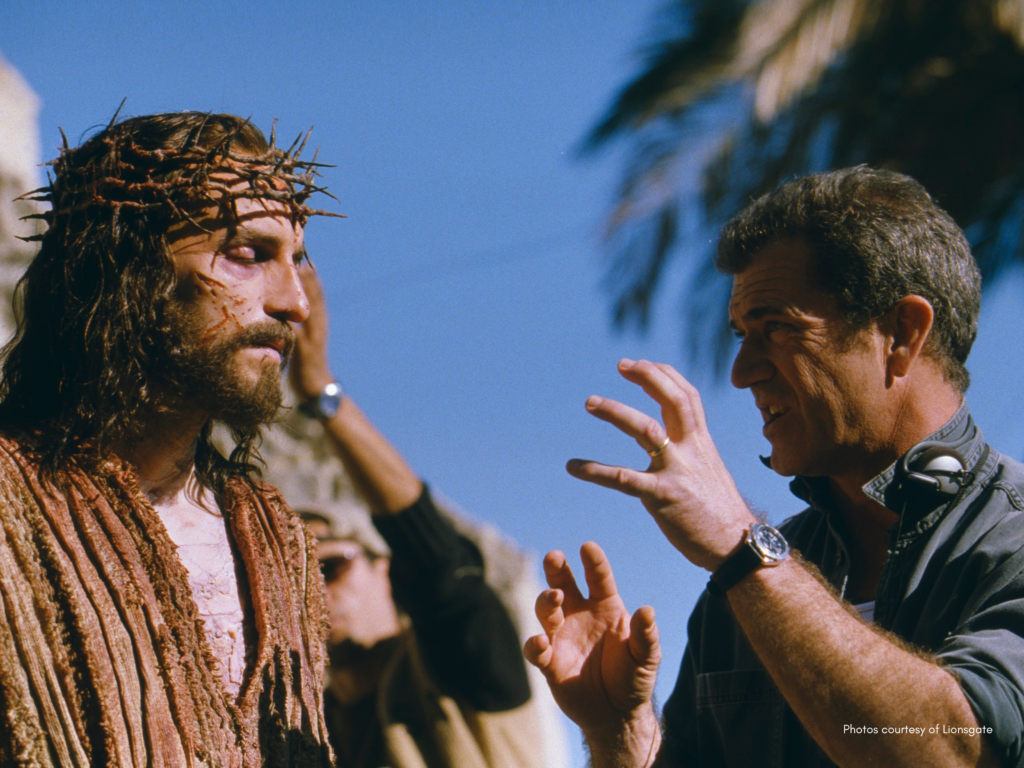
As someone who was blessed to grow up in the faith from a young age, The Passion of the Christ moved my heart in a deeply triumphant way when I first saw it upon its release in 2004. One of the greatest accomplishments of director Mel Gibson was visually bringing to life what redeeming our sins was truly worth to God, sacrificing His only begotten Son so that we could become cherished daughters and sons in His kingdom. Gibson’s passion for creating such an impactful cinematic vision of Christ’s death and resurrection goes far beyond anything previously put to film. It stands as a powerful testimony that God meets us right where we are and carries us far beyond ourselves into His divine purpose.
There is something profoundly moving about witnessing the immense pain Jesus endured for us. First emotionally in the quiet shadows of Gethsemane, then physically through the brutal beatings and His agonizing journey up Calvary. As the film opens, we are grounded in the ancient prophecy that anchors the entire story:
“But He was wounded for our transgressions, He was bruised for our iniquities; the chastisement of our peace was upon Him; and with His stripes we are healed.” Isaiah 53:5
The Agony in the Garden of Gethsemane
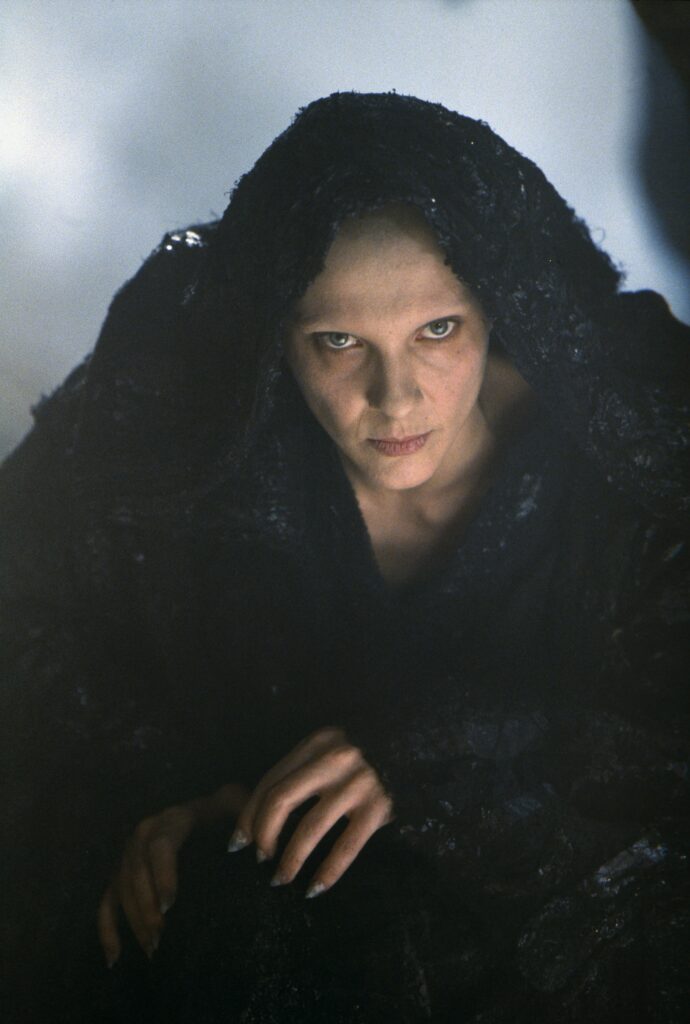
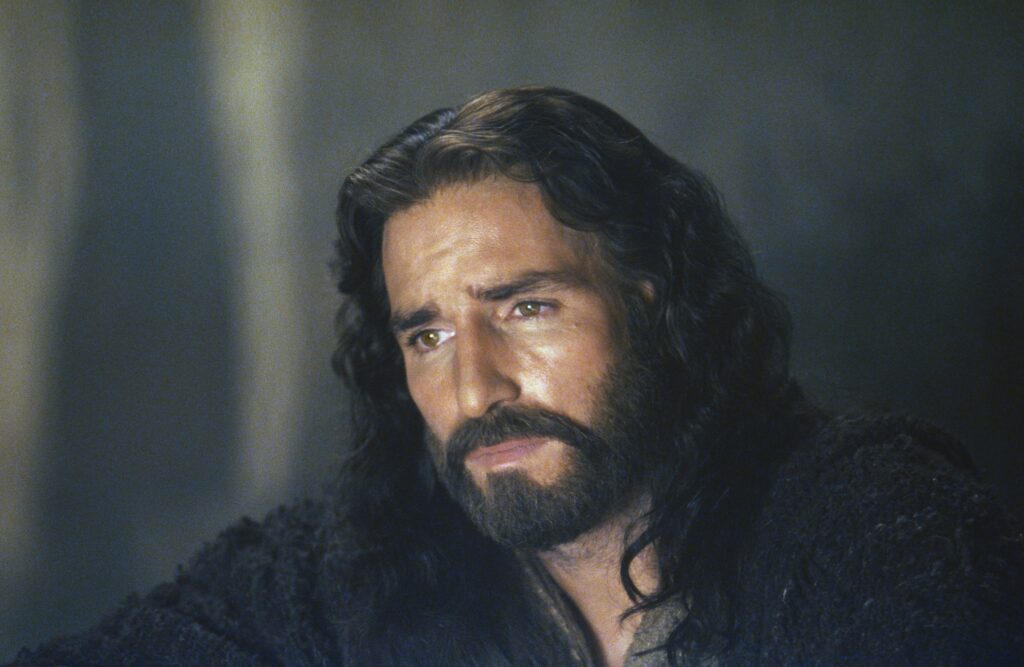
The story opens under the stillness of night in the Garden of Gethsemane, where Jesus, portrayed with extraordinary emotional depth and reverence by Jim Caviezel, who prays under overwhelming spiritual turmoil. As He pours out His heart to the Father, an eerie and sinister personification of Satan, played menacingly by Rosalinda Celentano, lurks in the background shadows.
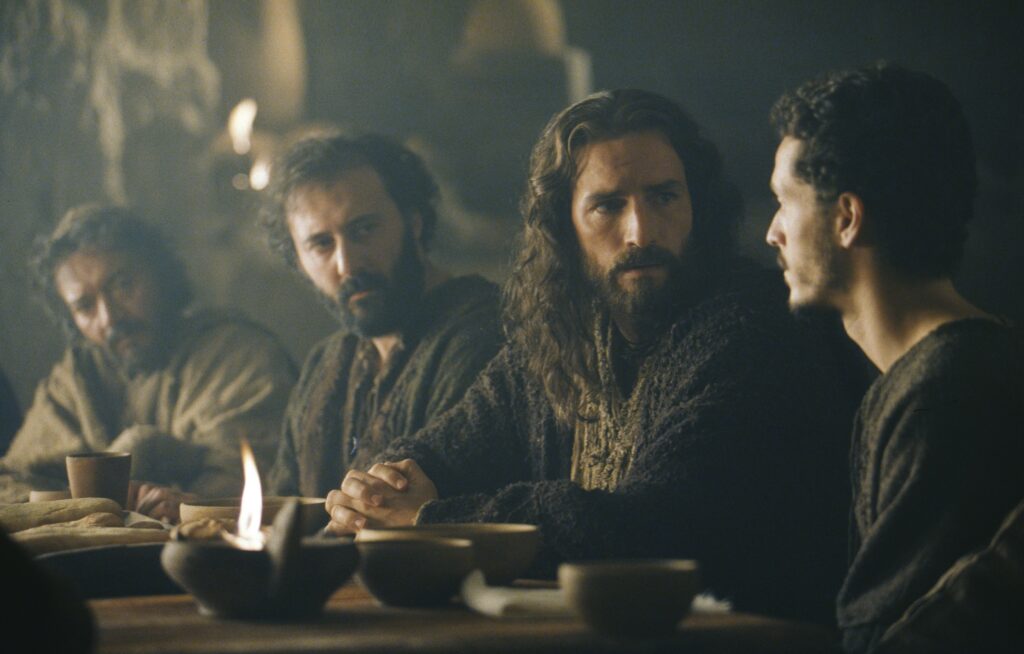
Nearby, His closest disciples keep falling asleep. Returning to them, Jesus gently reproves Peter (Francesco De Vito) and the others:
“What, could ye not watch with me one hour? Watch and pray, that ye enter not into temptation: the spirit indeed is willing, but the flesh is weak.” Matthew 26:40–41
In one of the most visually stunning and symbolic moments of the film, as the devil attempts to intimidate Him, Jesus steps forward and decisively crushes a serpent beneath His heel. This dramatic gesture visually realizes the earliest promise of redemption in Scripture:
“And I will put enmity between thee and the woman, and between thy seed and her seed; it shall bruise thy head, and thou shalt bruise his heel.” Genesis 3:15
Betrayal in the Dark
The narrative quickens as Judas Iscariot, played with haunting conflict by Luca Lionello, conspires with the religious authorities to hand over the Messiah:
“Then one of the twelve, called Judas Iscariot, went unto the chief priests, and said unto them, What will ye give me, and I will deliver him unto you? And they covenanted with him for thirty pieces of silver.” Matthew 26:14–15
In a heartbreaking display of intimate betrayal, Judas leads the temple guards into the garden and approaches Jesus, identifying Him with a warm kiss on the cheek:
“Judas, betrayest thou the Son of man with a kiss?” Luke 22:48
The Trial and Peter’s Anguish
Bound and led away, Jesus is brought before High Priest Caiaphas (Mattia Sbragia) and the council to face intense interrogation. Outside in the courtyard, Peter follows at a distance, torn between love and fear. When confronted by bystanders, fear takes hold, and Peter denies knowing his Lord three times:
“And Peter remembered the word of Jesus, which said unto him, Before the cock crow, thou shalt deny me thrice. And he went out, and wept bitterly.” Matthew 26:75
While the film movingly captures Peter’s profound remorse, a more explicit inclusion of the rooster crowing, just as Jesus had foretold would have grounded this personal tragedy even closer to the exact scriptural account (Luke 22:60–62).
Before Pilate and the Choice of Barabbas
Jesus is subsequently delivered into the hands of the Roman Governor, Pontius Pilate, played by Hristo Shopov. Sensing no crime in Him, Pilate attempts to release Jesus according to the feast-day custom, offering the crowd a choice between Christ and Barabbas (Pietro Sarubbi), a violent criminal:
“The governor answered and said unto them, Whether of the twain will ye that I release unto you? They said, Barabbas.” Matthew 27:21
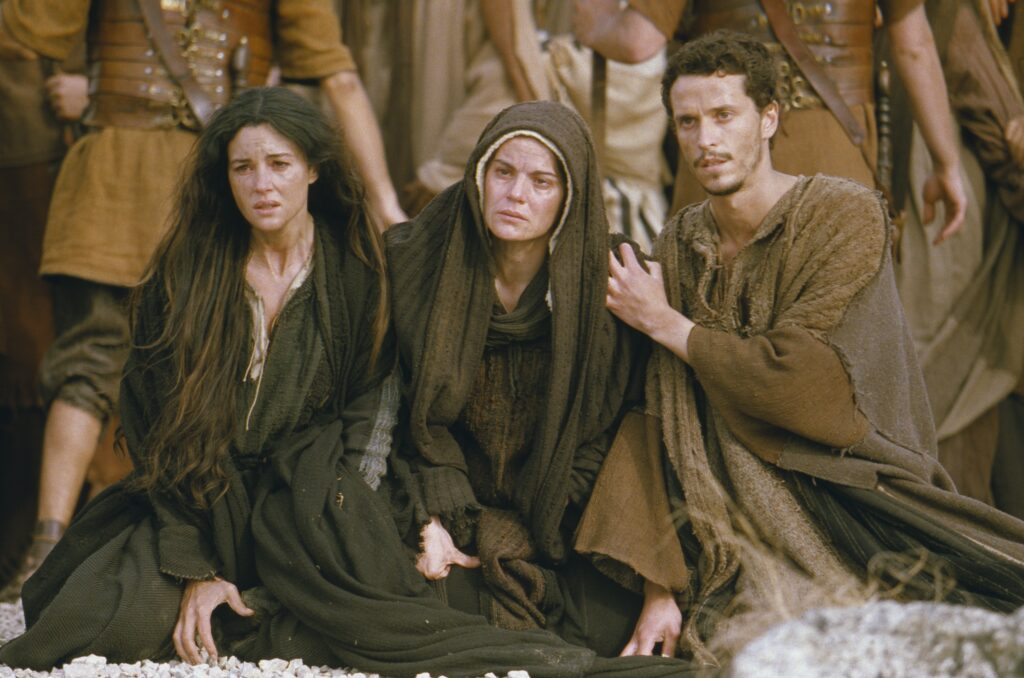
Driven by intense hostility, the religious leaders persuade the crowd to demand the freedom of a murderer while condemning the innocent Savior to execution. A deeply emotional scene of the painful reality of human rejection.
Scourging and Memories of Unconditional Grace
Jesus is subjected to shocking brutality at the hands of Roman soldiers. Yet amidst the horrific depictions of His scourging, the film thoughtfully weaves in tender flashbacks from His earthly ministry. One of the most beautiful moments recalls the account of the woman caught in adultery brought before Him:
“He that is without sin among you, let him first cast a stone at her… Neither do I condemn thee: go, and sin no more.” John 8:7, 11
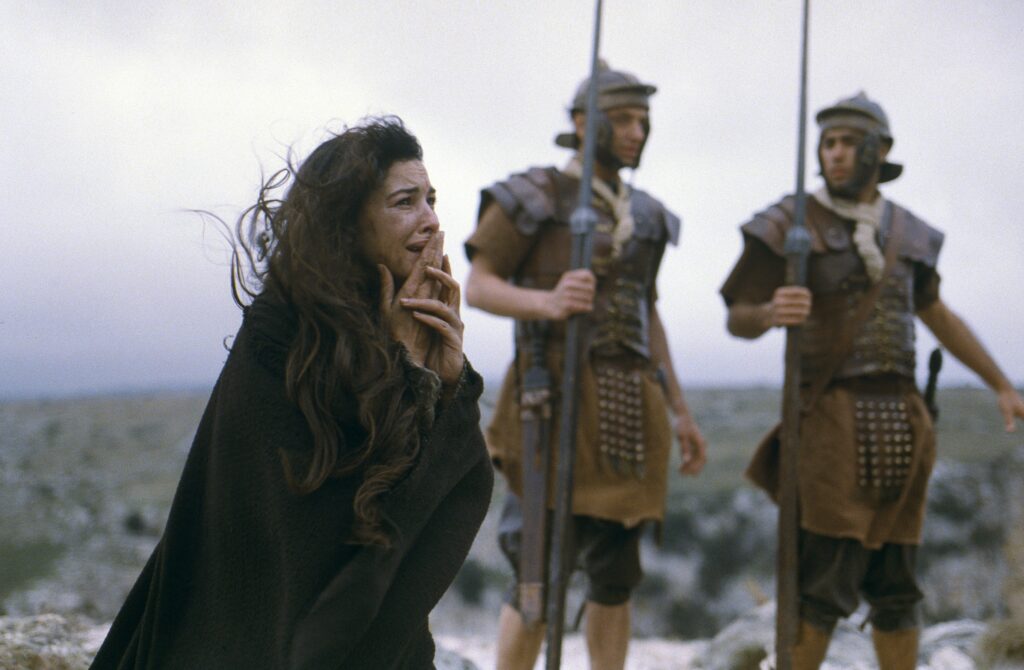
In the film, this woman is represented as Mary Magdalene, portrayed gracefully by Monica Bellucci, who kneels at Jesus’ feet in devotion, serving as a timeless symbol of redemption, grace, and new life.
The Via Dolorosa and a Mother’s Love
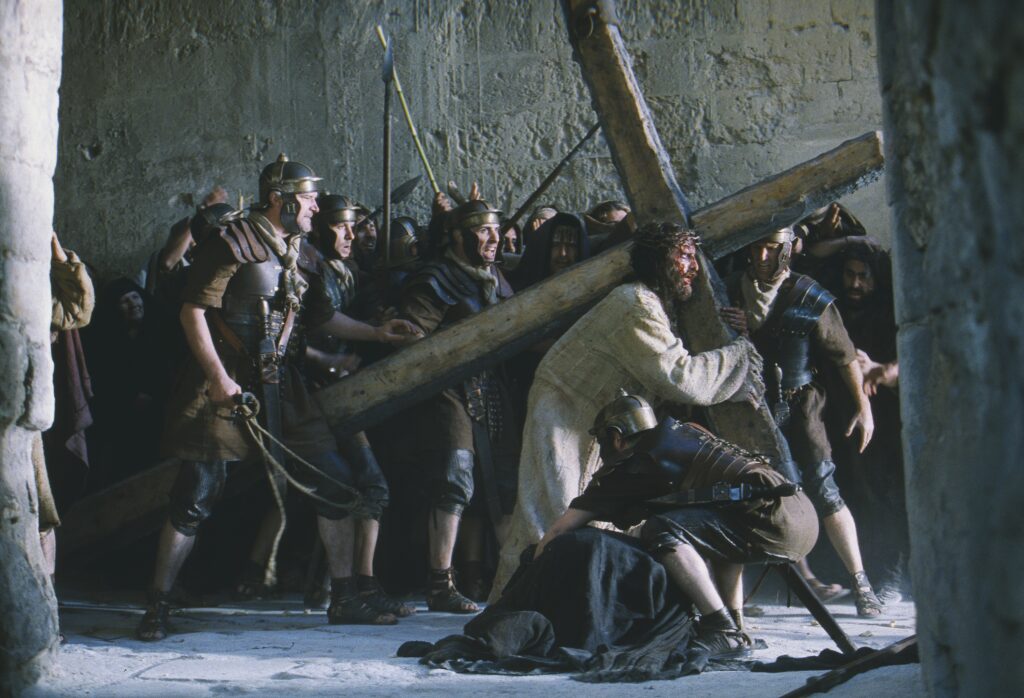
As Jesus carries the heavy wooden cross toward Golgotha with the help of Simon of Cyrene (Jareth J. Merz), every step carries immense weight. Beautiful cinematic connections unfold as His eyes meet Pontius Pilate, and later as He locks eyes with His mother, Mary, played with magnificent strength by Maia Morgenstern.
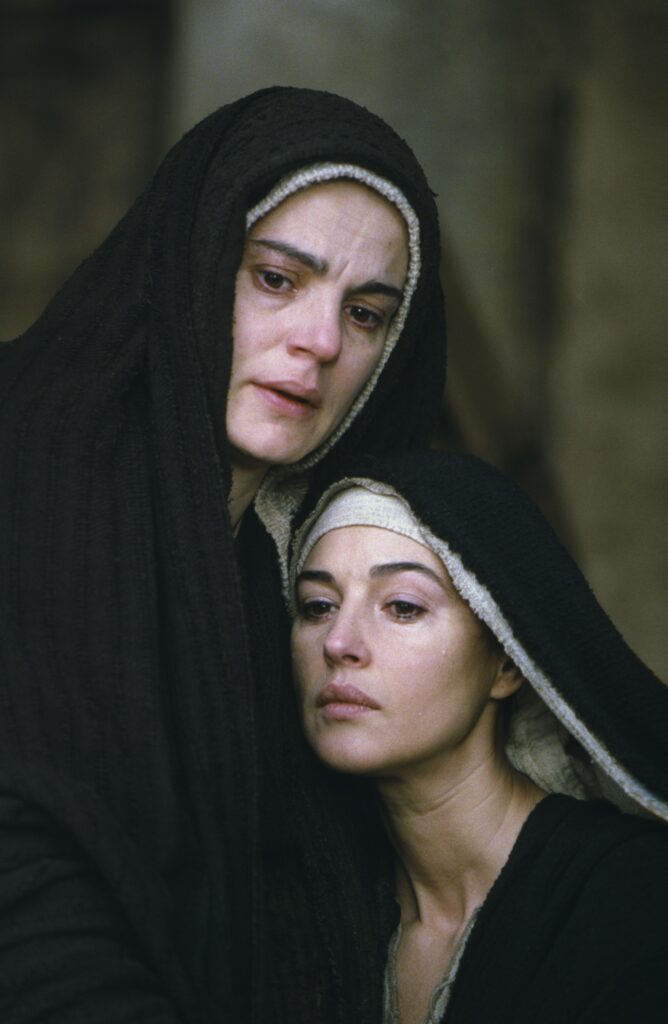
One of the most touching artistic additions in the film is the parallel drawn between Mary watching Jesus trip and fall as a small boy versus watching Him collapse under the wooden beam as a grown man. Like any mother, her natural instinct is to rush to His side and lift Him up. Though these specific visual flashbacks are creative expressions rather than explicit scripture, they bring a deeply human warmth to the reality of Christ’s sacrifice.
The Crucifixion, Earthquake, and Triumphant Resurrection
At Calvary, Jesus is nailed to the cross, bearing the complete physical and spiritual burden of humanity’s sin. At the moment He yields His spirit, creation itself responds with a great earthquake that cracks the earth and tears the temple veil: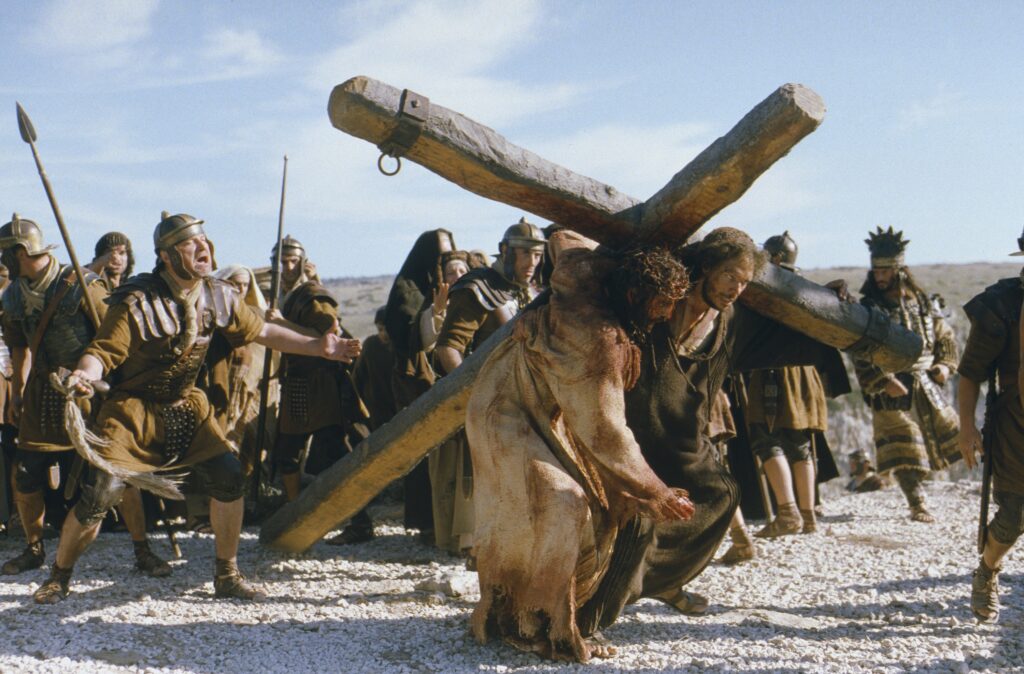
“And, behold, the veil of the temple was rent in twain from the top to the bottom; and the earth did quake, and the rocks rent.” Matthew 27:51
Yet the story does not conclude in grief. The film ends on a glorious, victorious note: the heavy stone rolled away from the tomb and Jesus stepping forth in resurrected power, having conquered death once and for all:
“He is not here: for he is risen, as he said. Come, see the place where the Lord lay.” Matthew 28:6
A Living Reality That Transforms Lives
What fills my heart with joy is knowing that His shed blood fulfilled the ancient prophecy of Isaiah 53 and so many others throughout the Holy Bible. Knowing that Jesus—Yeshua—willingly bore the sins of the entire world so that we could be engrafted into God’s eternal family (Romans 11:17) is beyond powerful.
This is not merely a historical account bound in a book; it is a living, breathing reality that can transform your life today:
“For God so loved the world, that he gave his only begotten Son, that whosoever believeth in him should not perish, but have everlasting life.” John 3:16
He endured every beating, every tear, and every drop of blood because of the boundless love of God. Jesus is our Savior, our Protector, and the most powerful Person who has ever walked the earth.
If you have heard about Jesus but have never personally surrendered your heart to Him, I encourage you to watch The Passion of the Christ to see what He endured for you and for the whole world. You are invited to step into this beautiful family of God:
“That if thou shalt confess with thy mouth the Lord Jesus, and shalt believe in thine heart that God hath raised him from the dead, thou shalt be saved. For with the heart man believeth unto righteousness; and with the mouth confession is made unto salvation.” Romans 10:9